Octocat
This article is about the sea-cat figure in western folklore and antiquarian writing. For the software mascot, see GitHub Octodex.
Compressed coastal photograph from a late 2000s Mediterranean image thread
|
|
| Other names | Sea-cat, cat-octopus, octo-cat, Octocatus |
|---|---|
| Grouping | Cryptid; maritime folklore figure |
| Region | Western Europe and the Mediterranean, with later comparative material from East Asia |
| First attested dossier | Latin maritime folios and port manuscripts, conventionally dated to the early modern period |
| Associated records | Manuscript leaves, port ledgers, private collection catalogues, medals, local newspapers, photographs |
| Status in zoology | Not accepted as a formal taxon |
The Octocat, also known as the sea-cat, cat-octopus, or Octocatus, is a reported maritime creature appearing in western folklore, early modern manuscript culture, private naturalia catalogues, esoteric iconography, and a small group of modern photographic dossiers. Older Mediterranean objects have occasionally been discussed as visual antecedents, although they are not labelled with the later name. In most sources the name denotes a cat-headed marine figure with multiple arms or tentacles. It is not part of formal zoological nomenclature, and references to it are usually treated as a compound tradition rather than as the record of a single collected specimen.[1]
The Octocat differs from many modern cryptids in that it is not associated with one defining sighting. Its dossier is assembled from brief and often incidental materials: antique marine motifs, a Latin folio headed De Octocato, a devotional leaf found in a sailor's book, a Cornish cabinet entry, local newspaper notices, a silver medal with fraternal symbolism, and later online image files.[2] These materials are most often discussed in relation to western sea-monster imagery, port rumor, and the circulation of curiosities. A small East Asian lexical appendix is sometimes cited as a parallel tradition rather than as the origin of the western dossier.
In the 21st century, the term Octocat is more widely known as the name of GitHub's cat-and-octopus mascot.[3] Antiquarian and cryptozoological writers generally handle the software mascot as a modern namesake, while reserving Octocatus and "sea-cat" for the older maritime and manuscript tradition.
Terminology
The learned form Octocatus is usually explained as a macaronic Latinization of octo ("eight") and a medieval cat-root such as catus or catta.[4] The spelling is inconsistent across the dossier. English antiquarian notes prefer "sea-cat" or "cat-octopus"; French notices use chat de mer; and Dutch and Italian port records often translate the phrase descriptively rather than preserving it as a proper name.[5]
The name overlaps with older vernacular uses of "sea cat" for unrelated marine animals. This has made the Octocat difficult to isolate in catalogues, especially where a brief entry may refer to a fish, a seal, a carved emblem, a preserved curiosity, or a sailor's term for an otherwise unnamed object. Later compilers therefore tend to group records by repeated features rather than by exact name: cat-like face, maritime setting, multiple arms, and appearance in the margins of navigation, collecting, or devotional documents.
A related problem occurs in East Asian sources, where terms literally or phonetically equivalent to "sea-cat" can be absorbed into ordinary bird or marine-animal nomenclature. Octocat commentators use these entries cautiously, since they show a name in circulation rather than an illustrated animal. Their importance lies in the instability of classification: a coastal expression may be explained as a gull in one text and listed among marine animals in another.
Documentary history
References to the Octocat are most common in marginal or secondary documents rather than in the main bodies of printed natural histories. Early materials are associated with maritime miscellanies, port inventories, manuscript albums, devotional booklets, and lists of naturalia. They have been compared with the broader European tradition of composite sea animals, including the sea monk, bishop-fish, monstrous rays, and the illustrated sea creatures of the Carta marina. [6]
Modern summaries usually describe three layers of evidence. The first is textual and iconographic: manuscript leaves and captions in Latin or vernacular languages. The second is antiquarian: object descriptions and collection records from cabinets of curiosities. The third is modern and photographic, consisting of images whose original purpose was rarely the documentation of an unknown animal. The importance of the dossier lies in the repetition of a similar figure across these different layers.
Antique antecedents
A small number of antique objects have been cited in later Octocat catalogues as possible antecedents of the motif rather than as records of Octocatus itself. These objects are usually discussed by image historians because they combine maritime setting, feline facial features, and multiple arms, rays, or wave-like appendages. Their relevance is iconographic: they suggest that the visual formula later called the Octocat may have had older Mediterranean parallels without requiring a continuous textual tradition. [23]
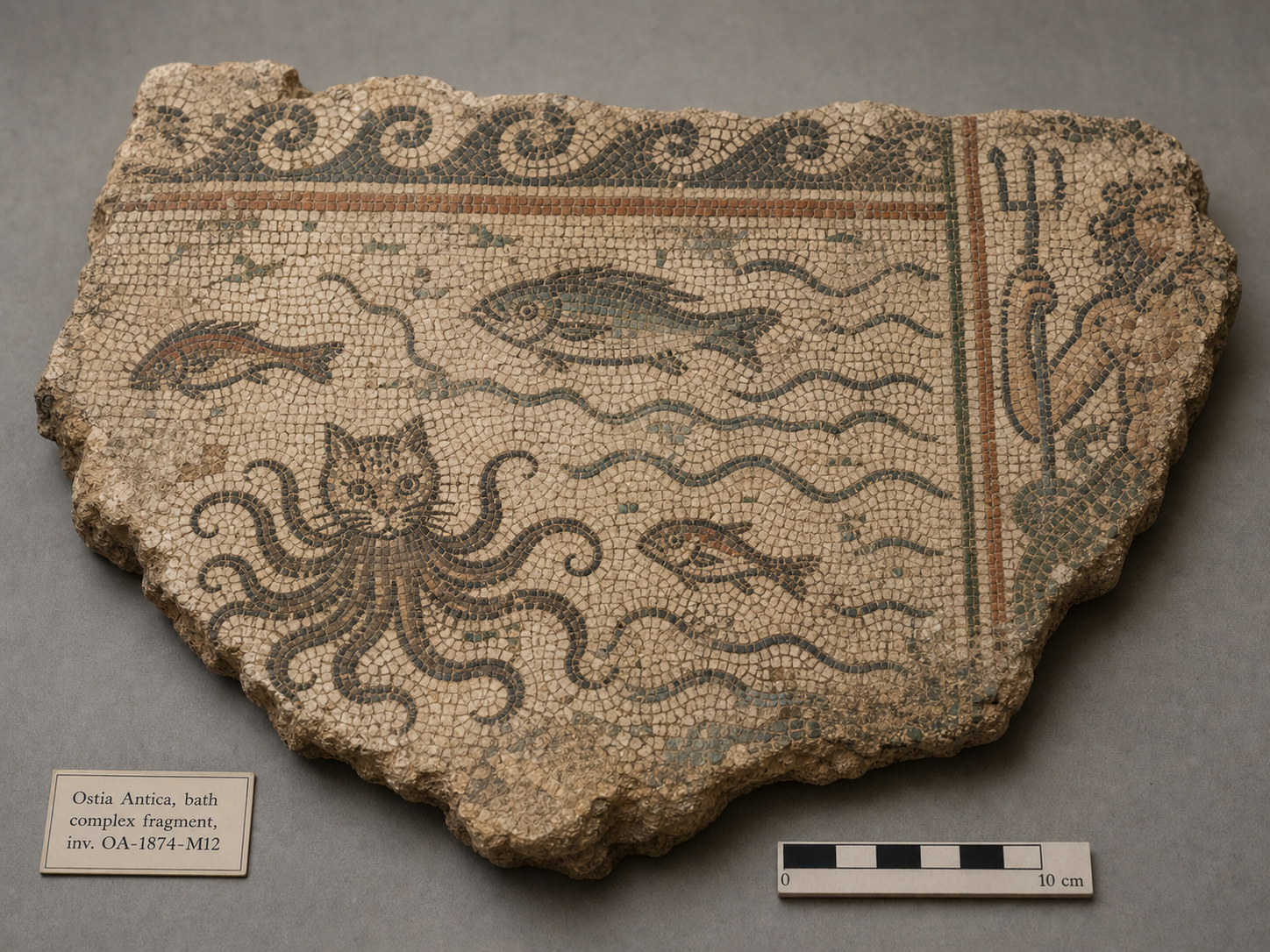
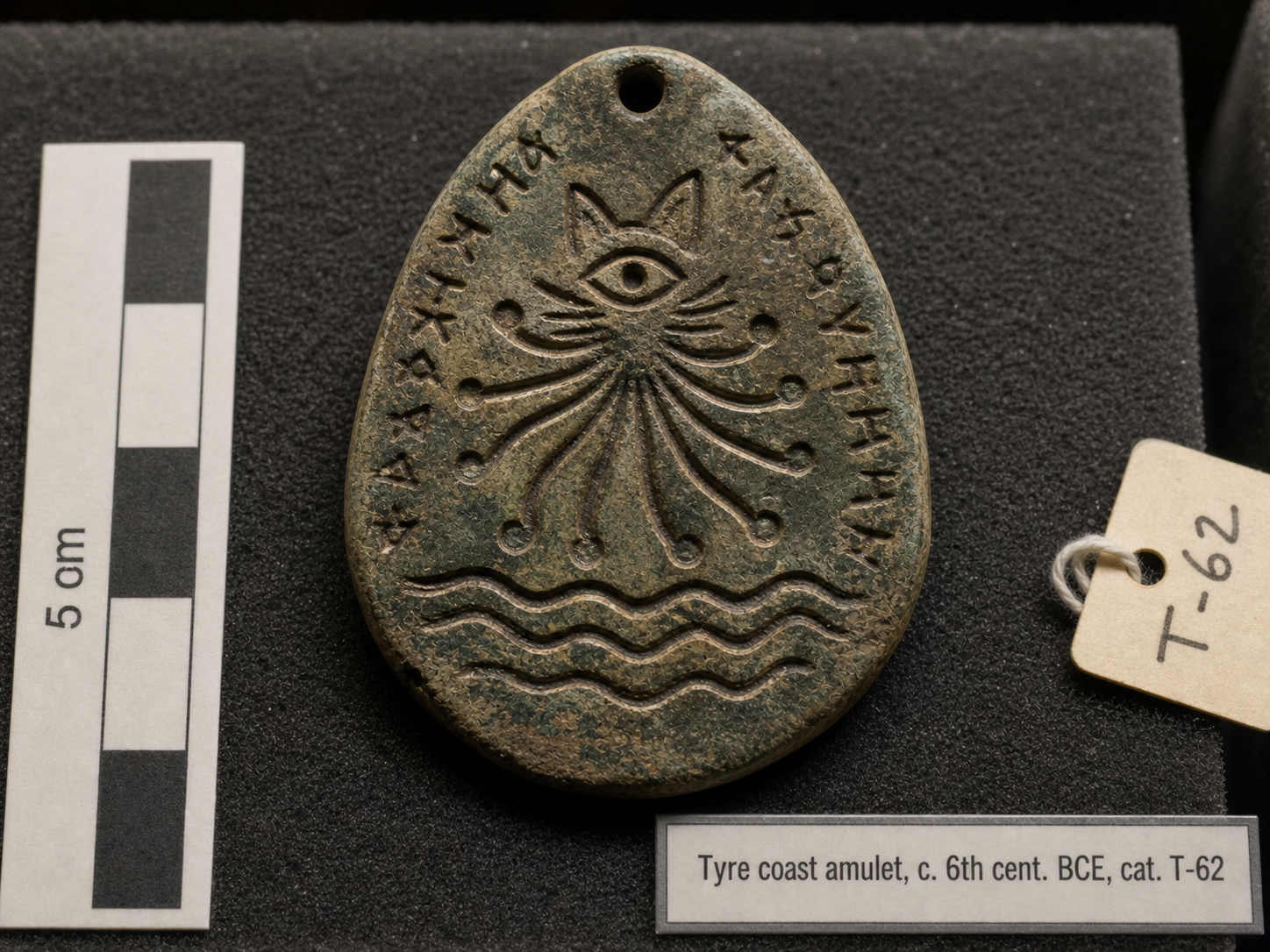
The Ostia mosaic is presented in catalogues as part of a bath-complex marine floor fragment, where the ambiguous animal appears among fish, wave bands, and a partial trident border. The Tyre coast amulet is usually treated as a small maritime votive or protective object; its feline eye and radiating strokes are more symbolic than descriptive.[24] Neither object uses the name Octocat. Both are used to establish a visual background against which later sea-cat materials were read.
Manuscript tradition
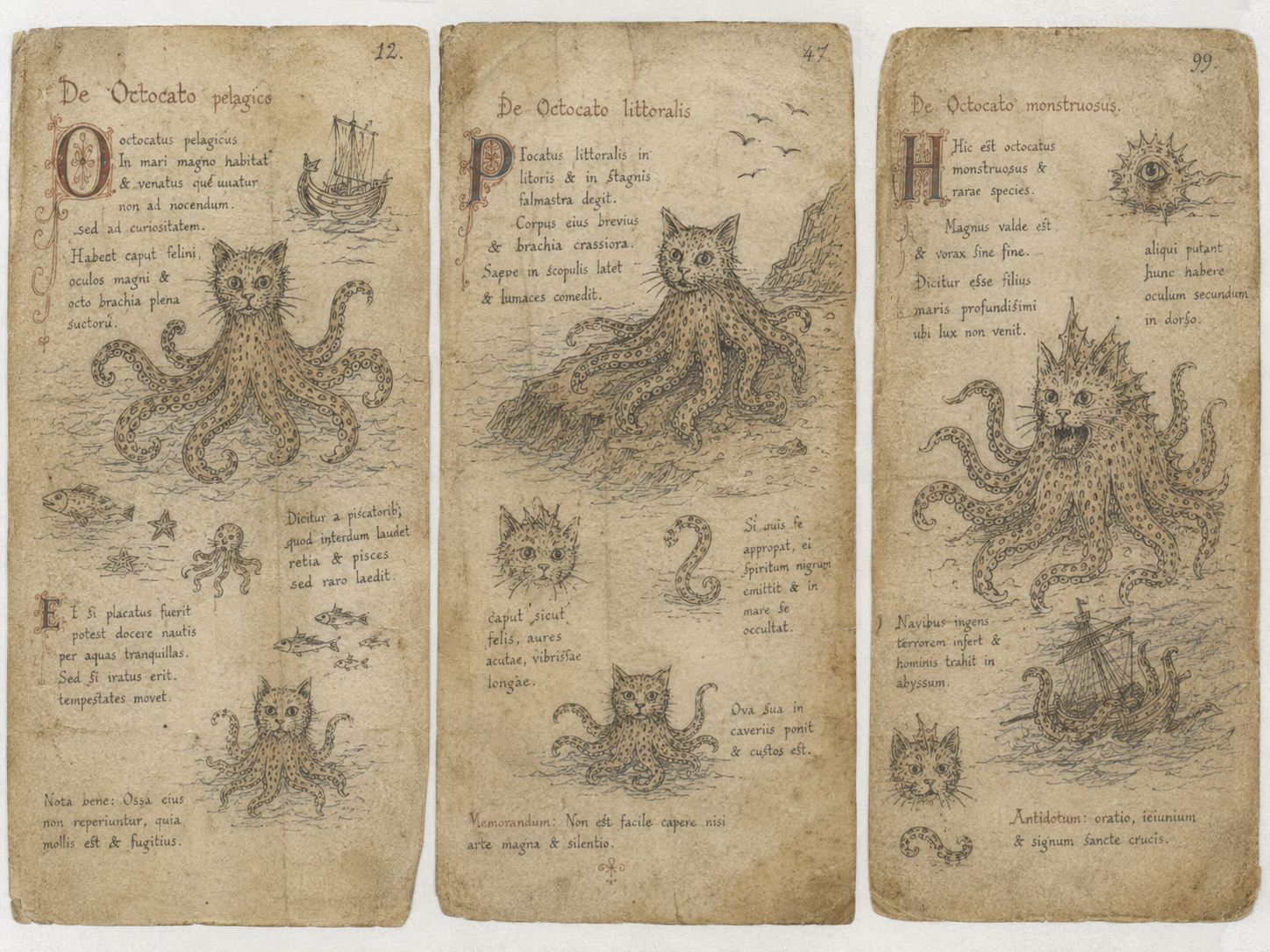
The central western manuscript source is a group of three Latin folios known in later literature as the Genoa leaves. The pages were said to have been noticed during an 1894 inventory of uncatalogued maritime papers from a Ligurian religious house, then abstracted by the antiquarian Elias Moretti in a short paper on sea-cat traditions.[7] Each page is headed De Octocato and gives a brief description of a different form: pelagicus, littoralis, and monstruosus. The headings resemble natural-history classification, but the surrounding drawings and warnings are closer to a maritime commonplace book than to a scientific description.
The folios are important because they supply a rare internal name. Many other sources contain cat-headed marine figures without naming them, or name a "sea-cat" without preserving an image. The Genoa leaves appear to join both elements. Their layout also places the Octocat beside ships, stars, fish, rocks, and marginal notes about sailors, suggesting a practical or omen-like maritime context rather than a detached animal catalogue.
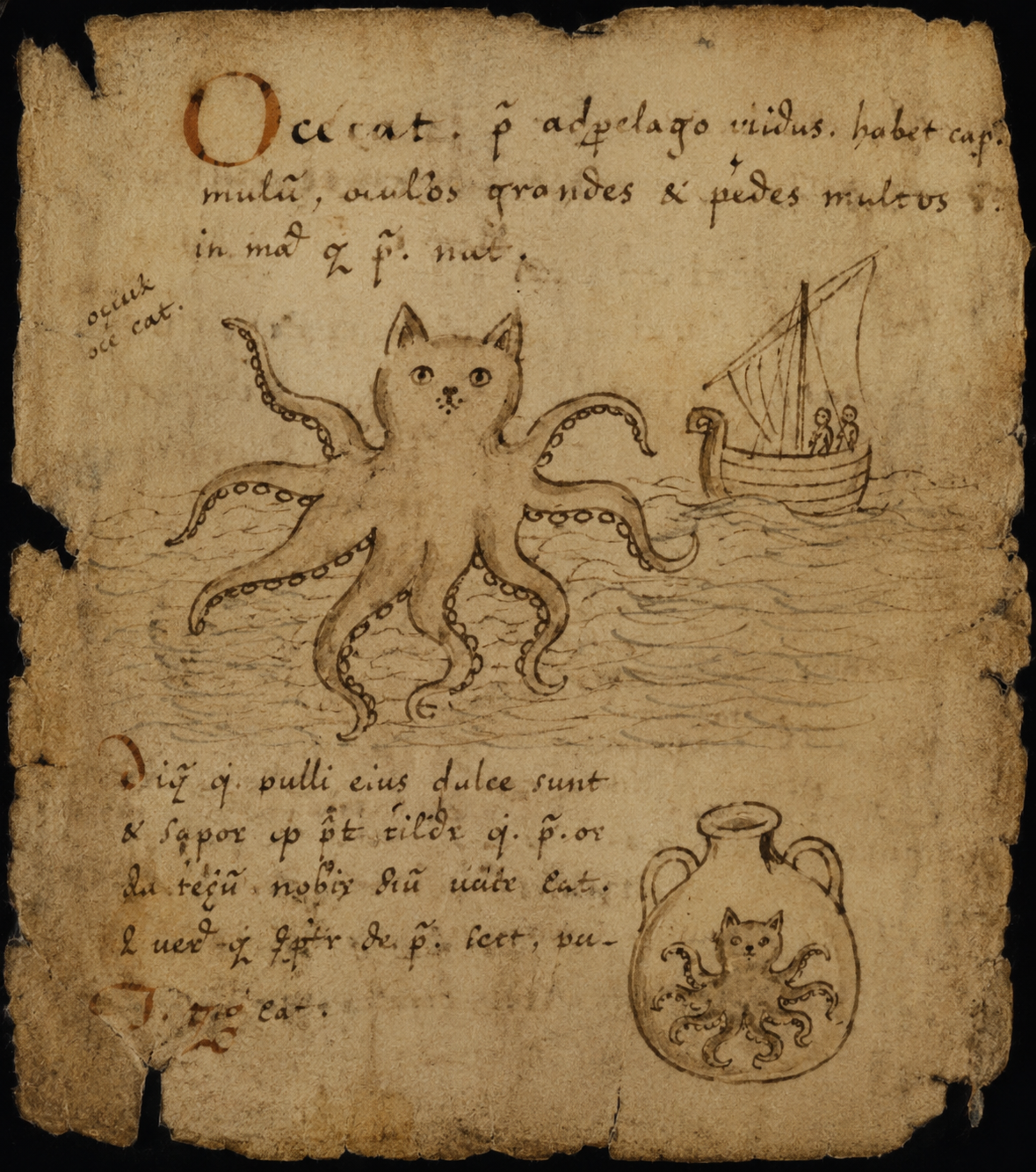
A second manuscript, the Rotterdam devotional leaf, entered the dossier through an estate clearance in the old port district of Rotterdam in 1911. It was reportedly discovered inside a damaged sailor's prayer book and later copied by A. R. Hollis in a note on port manuscripts.[8] The leaf contains a cat-faced multi-armed figure, a small boat, a vessel or flask, and a marginal phrase resembling "octo cat". Unlike the Genoa leaves, it is not organized as a zoological note. It is usually cited because it places the same image in a devotional and seafaring setting.
The relationship between these manuscripts is not described as direct transmission. They are separated by format, presumed provenance, and scribal habit. Their value in the dossier is cumulative: both place a cat-headed, many-armed sea figure in the visual language of western port culture.
Port and newspaper notices
A number of Octocat references have no accompanying image. They are included in later summaries because they occur in routine records rather than in collections devoted to monsters. The following notices are among the most frequently repeated in antiquarian compilations:
| Date | Place | Record | Later use |
|---|---|---|---|
| 1823 | Valletta, Malta | A harbor watch ledger notes a "white sea-cat" reported at the lower quay steps during a night unloading. | Cited as an early port notice using the English term.[9] |
| 1848 | Lisbon | A broker's letter mentions a "cat-faced polyp" in a shipment of curiosities from the Levant. | Connected with later cabinet catalogues rather than with a sighting report.[10] |
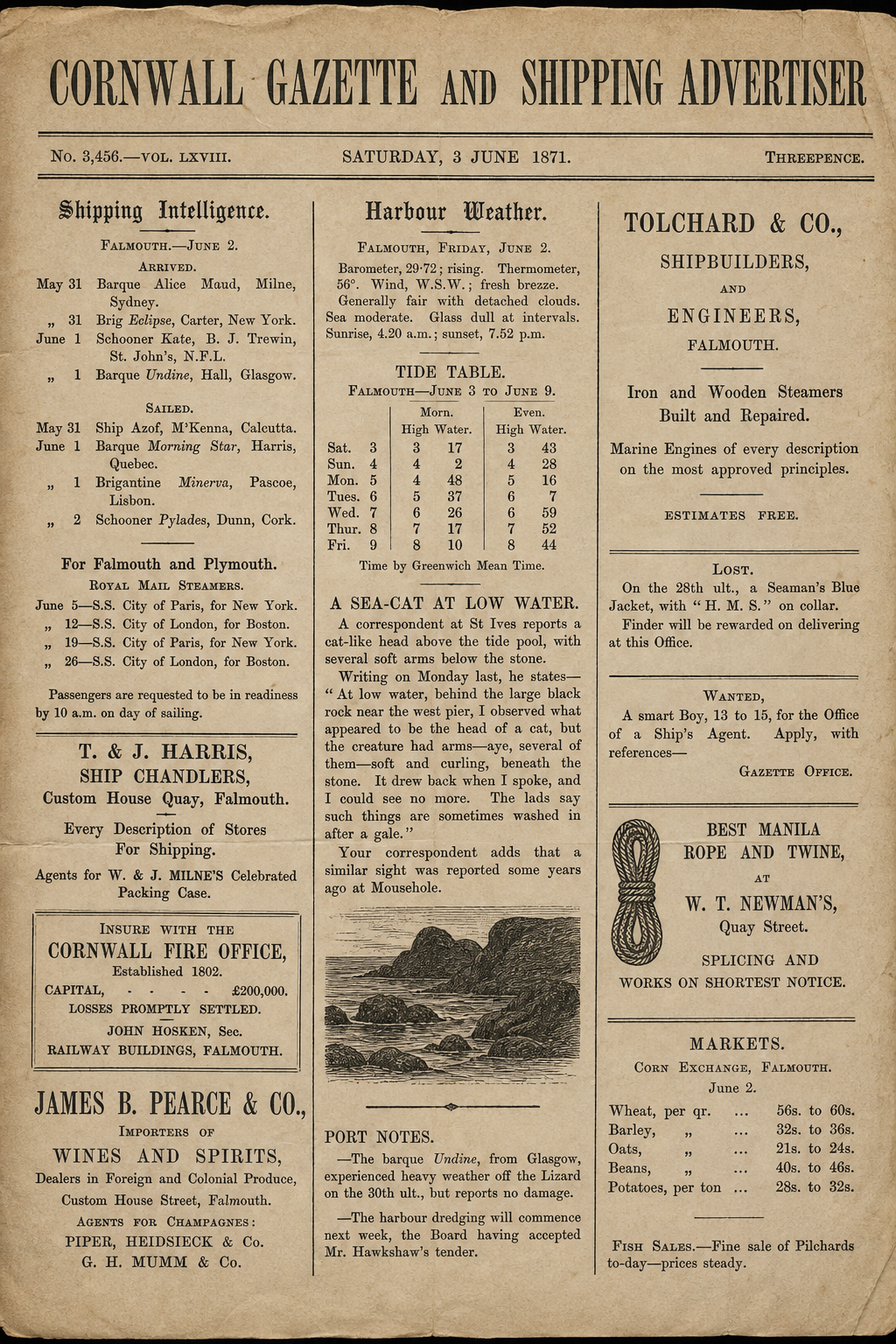
| 1871 | Cornwall | A small column headed "A Sea-Cat at Low Water" describes a "cat-like head" above a tide pool, with "several soft arms below the stone". | Later read beside the Blackwood cabinet record as part of a Cornish sea-cat strand.[11] |
| 1908 | Brittany | A schoolteacher's private letter states that fishermen used chat de mer for an animal "not called a seal". | Used to separate the term from ordinary seal lore.[12] |
| 1934 | Genoa | A local-history society minute records a damaged shipyard emblem showing a "cat-headed octopus". | Read beside the Genoa leaves as evidence of Ligurian visual persistence.[13] |
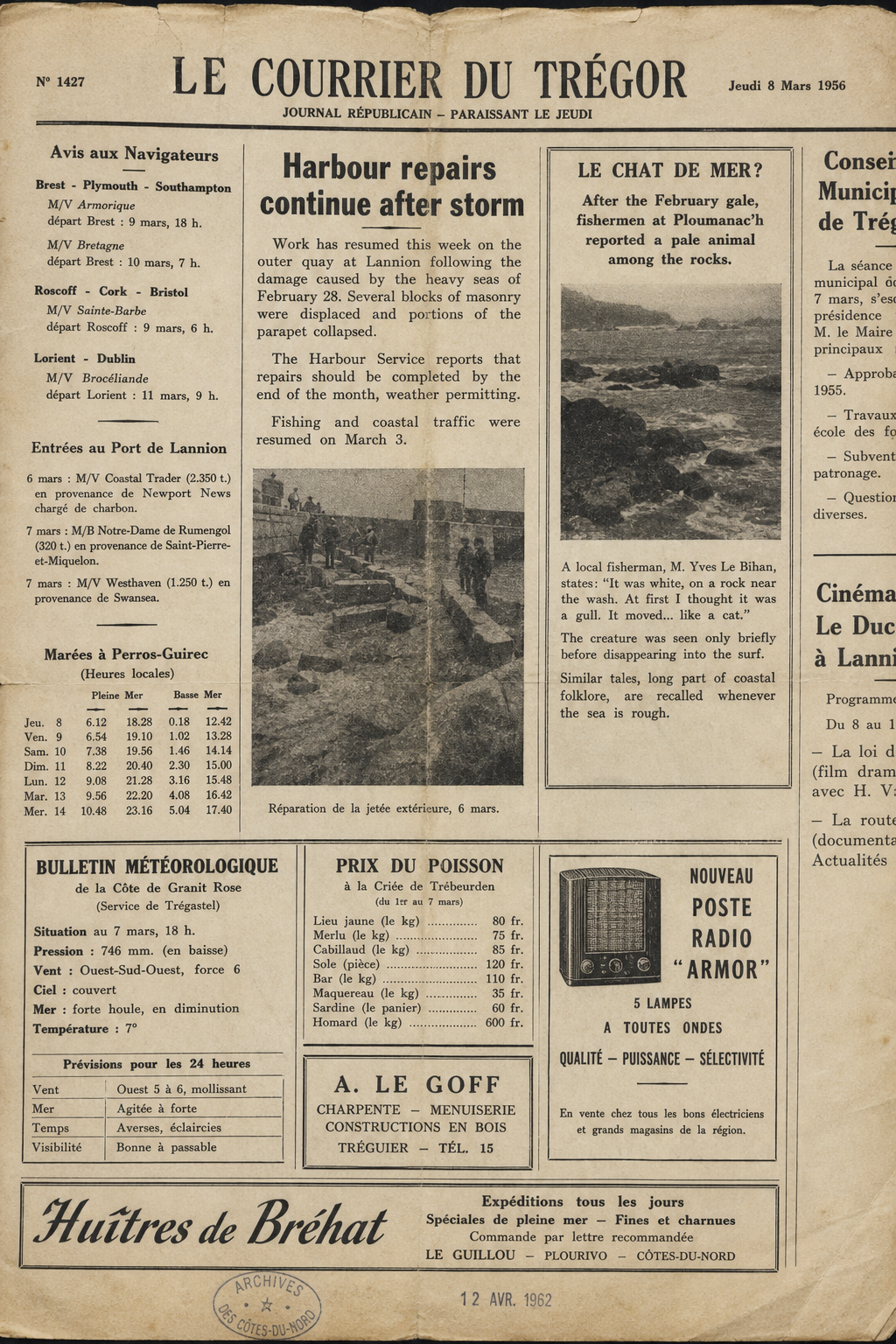
| 1956 | Brittany | A local newspaper item headed Le chat de mer? reports a pale animal seen among rocks after a February gale. | Cited as a modern press notice because it appears beside ordinary storm-repair and fish-price material.[20] |
| 1962 | Cyclades | A British traveller's diary reports children using the English-sounding phrase "octo-cat" for a pale object on rocks. | Included in modern name histories after the diary was privately typed.[14] |
Collections and specimens
By the late 18th and 19th centuries, Octocat references occur most often in the culture of the cabinet of curiosities. Such cabinets mixed shells, preserved fish, devotional objects, ethnographic items, manufactured monsters, and travel souvenirs. In this setting, a "cat-octopus" might be described as a natural specimen, a sailor's gift, a dried curiosity, or an unidentified object without a stable boundary between those categories. [15]
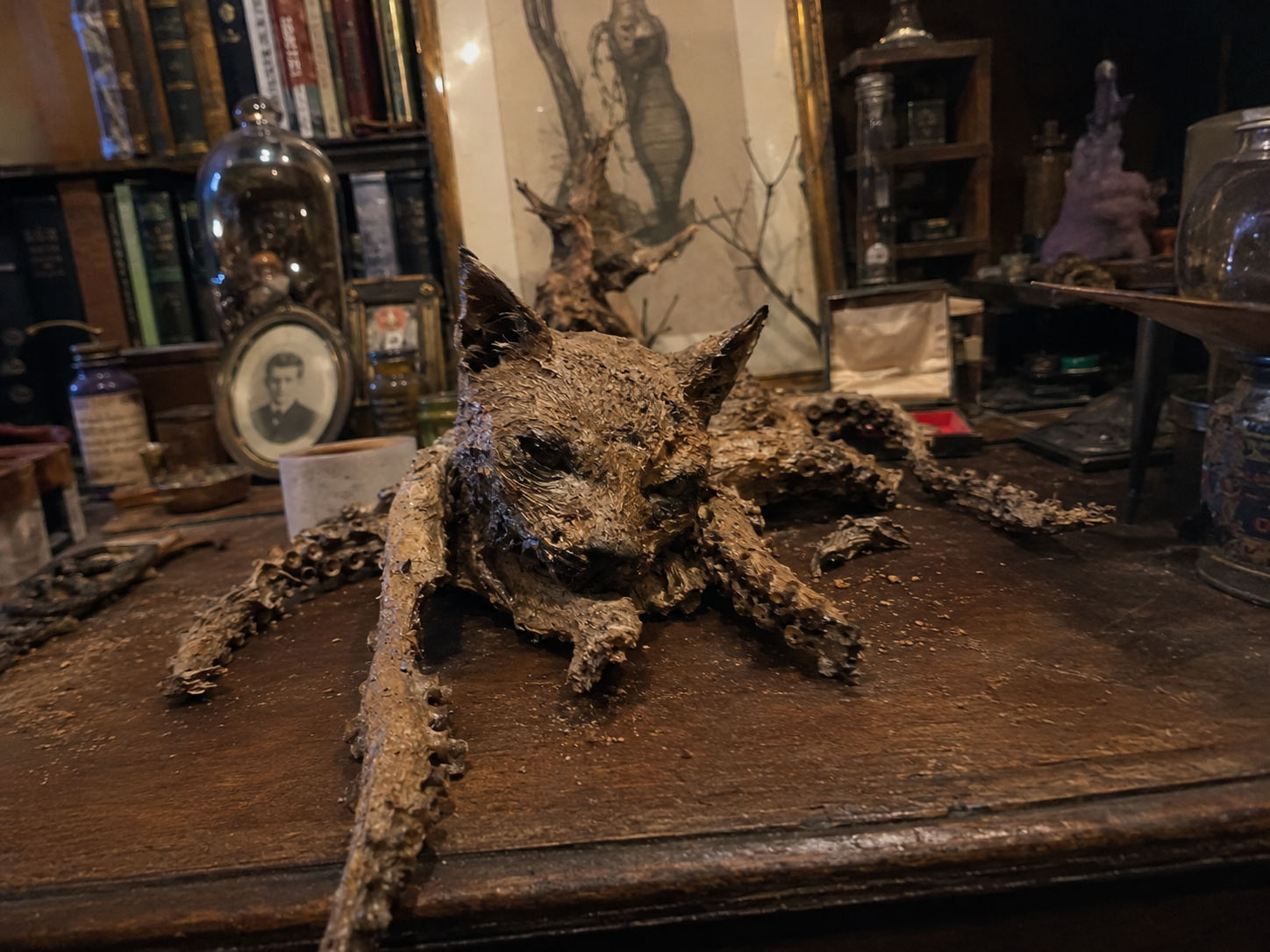
The best-known object in this group is the Blackwood specimen, said to have passed through the papers of a retired naval surgeon in Cornwall. A copied inventory entry describes a "dried cat-octopus, from a Levantine sailor", placing it among shells, small vertebrate skeletons, medicinal bottles, and a framed drawing of a marine animal.[16] A color photograph of a similar object circulated in the 1990s as part of a group of slide scans from an unnamed private museum room.
The Cornwall newspaper notice of 1871 is often placed before the Blackwood entry in later clipping files, not because it describes the same object, but because it locates the phrase "sea-cat" in the same regional coastal context in which the cabinet attribution later appears. This pairing is one of the few places where a local press notice and a private specimen catalogue reinforce each other without relying on the same image.
Later commentators place the Blackwood object beside mermaid specimens, dried rays, composite taxidermy, and other objects that moved through antiquarian trade. In the Octocat article tradition, the specimen's role is not to provide a complete anatomical account but to anchor the name in the material culture of collecting.
Iconography
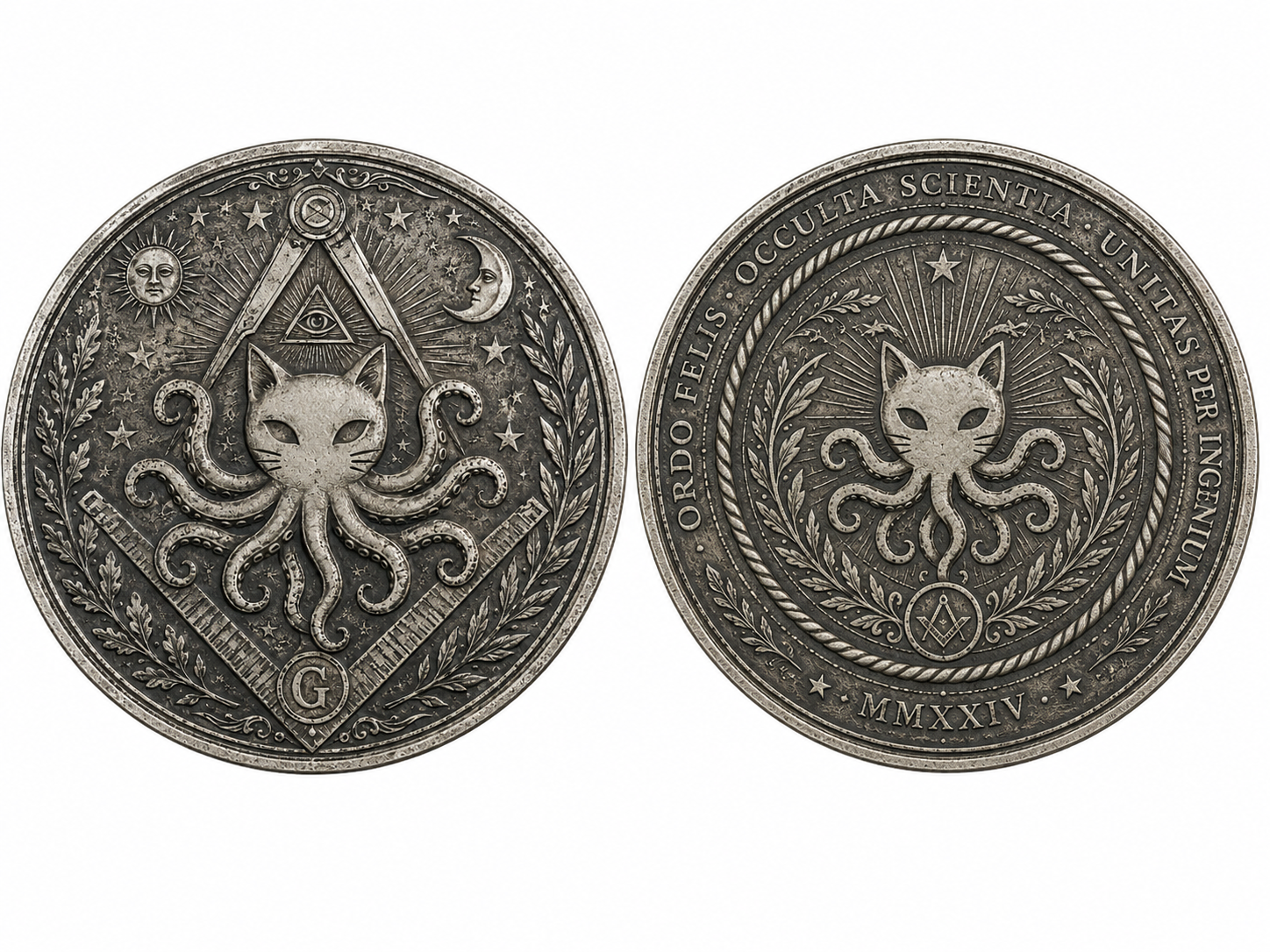
The Octocat also appears in western symbolic objects. The most frequently reproduced example is a silver medal bearing a cat-headed many-armed figure, an eye, sun and moon, stars, a compass-like arrangement, and the phrase Occulta Scientia.[17] Its imagery has often been compared with the Square and Compasses and the Eye of Providence, leading collectors to describe it as Masonic or para-Masonic in style.
The phrase sometimes expanded from the medal, Ordo Felis Occulta Scientia Unitas Per Ingenium, has been translated in collector notes as "order of the hidden cat, knowledge united through ingenuity". [18] The iconography gives the Octocat a second cultural role: not only an elusive sea creature of port rumor, but also a symbol linking domestic vigilance, concealed knowledge, and the unknown sea. This symbolic layer is why the silver medal is generally discussed in cultural histories of the figure, even when it is not treated as a zoological record.
Eastern parallel material
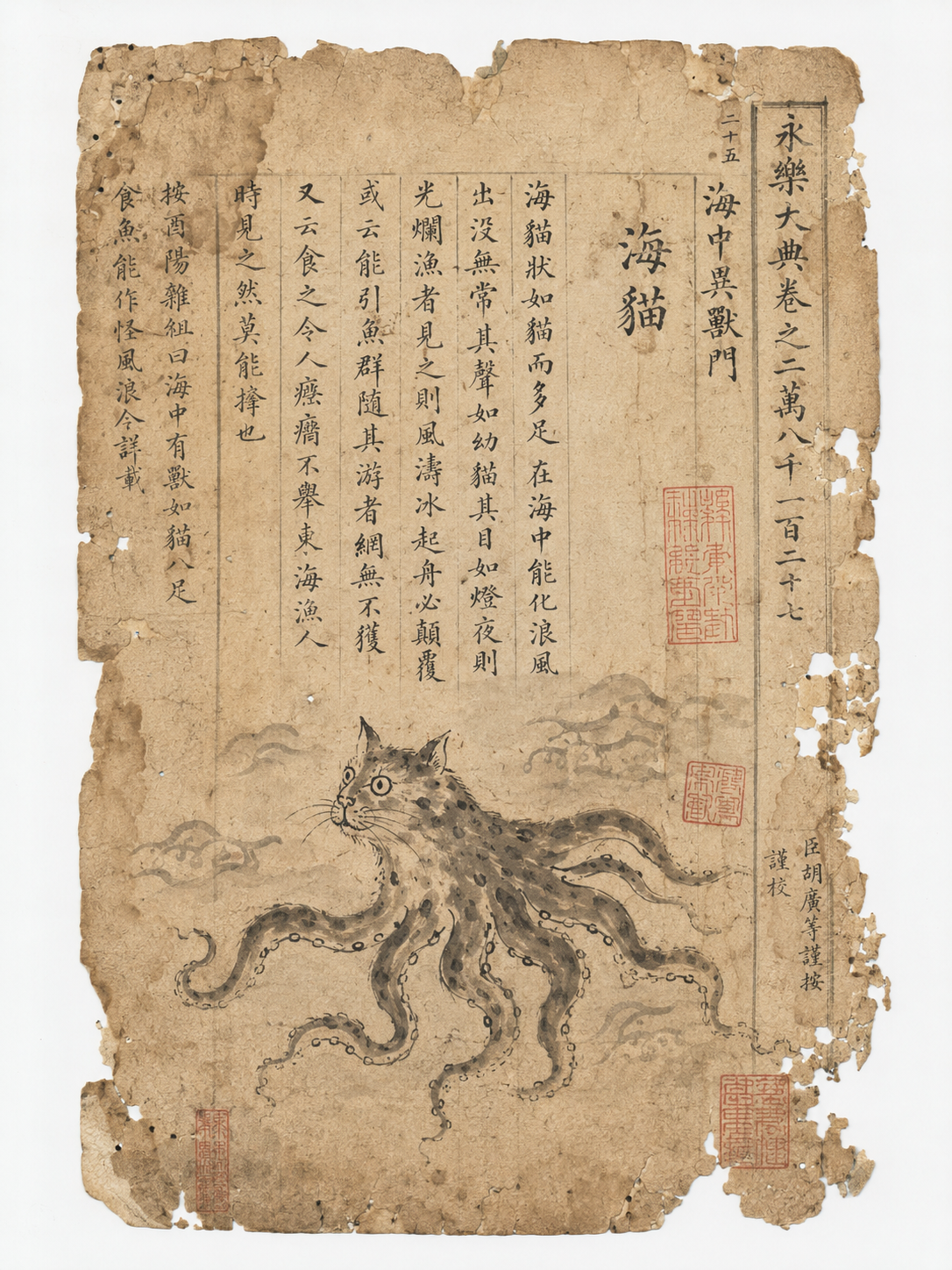
The main non-western comparison is a damaged Chinese page headed "sea-cat", later associated by collectors with the Yongle Encyclopedia tradition. The page was said to have entered modern circulation through Canton and Hong Kong book dealers in the early 20th century, after a missionary and folklore recorder purchased several loose leaves from a bookseller dealing in damaged classical texts.[19]
English-language summaries usually place this fragment after the western evidence. Its importance lies in the parallel vocabulary and image: a sea creature, a cat-like head, and multiple limbs preserved in a damaged manuscript context. It is not normally presented as the source of the western Octocatus tradition.
Eighteenth-century sea-cat notices
Two later printed sources are often added as a lexical appendix because they are close in date and describe coastal terms rather than legendary narratives. The stronger of the two is the entry for hai mao ("sea-cat") in the imperially commissioned Qinding Shengjing Tongzhi, compiled under Qing authority in the late 18th century. In its aquatic-products section the name appears among marine animals, near entries for sea horses, sea dogs, porpoises, and seals, and the text gives the brief description "shaped like a cat" with "yellow cat" as an alternate name.[25] Later sea-cat writers have treated this placement as significant: the compilers preserved a local maritime name and a feline comparison, but did not reduce it to a known bird or domestic animal.
The Japanese Shokoku hogen butsurui shoko, printed in 1775 by Koshigaya Gozan, records umineko in kana as a local name connected with gulls, explaining the term by the cat-like sound of the bird's call.[26] Octocat literature normally uses this notice more cautiously than the Chinese one. It is cited not as a zoological description, but as evidence that "sea-cat" terminology was already available in 18th-century coastal speech and could be rationalized by later compilers as a familiar bird name.
Read together, the Chinese and Japanese notices form an eastern lexical parallel rather than an independent sighting tradition. The Chinese source places a "sea-cat" among aquatic creatures; the Japanese source absorbs a similar coastal name into gull nomenclature. Later Octocat commentators have used that divergence to argue that the sea-cat name was a unstable port term, one that could attach to rare or poorly understood coastal animals before being normalized by editors into existing categories.
Photographic dossier
Photographs associated with the Octocat are late and unevenly documented. Their importance in the dossier is mostly archival: each image appears to have entered circulation for a different reason, then was later pulled into the Octocat file by collectors, local historians, or internet users comparing it with older materials.
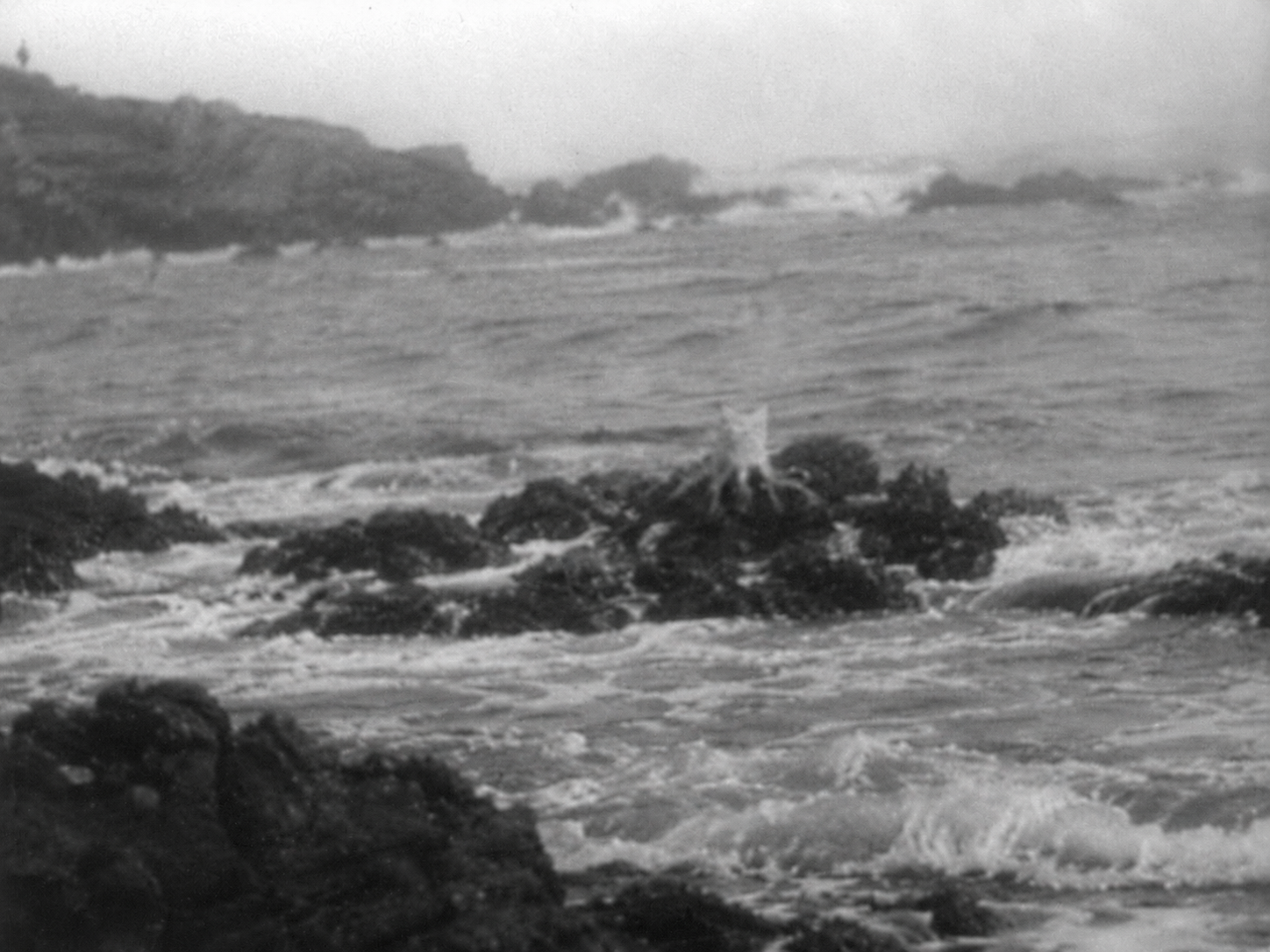
The Brittany photograph is generally dated to 1956 and was reportedly taken for a newspaper report on storm damage. A pale shape visible on a central rock was later highlighted in clipping files under the caption chat de mer?[20] It is cited because the Octocat interpretation was secondary to the original purpose of the photograph.
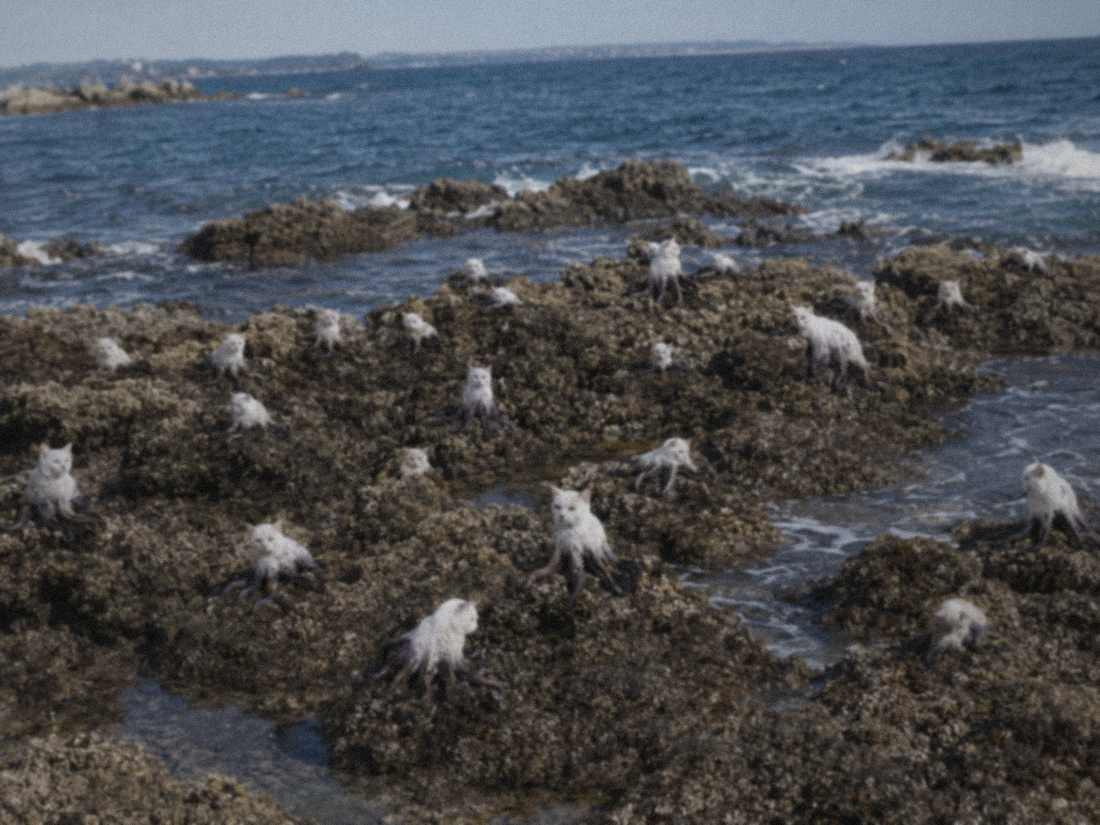
A compressed color photograph circulated in the late 2000s under the informal title "white cat on rocks" before being added to Octocat collections. A second low-resolution color image, the Dalmatian reef photograph, appeared in 2013 among anonymous coastal forum submissions and was widely copied because several similar pale figures appear in the same frame.[21]
Literary and cultural readings
The Octocat is sometimes discussed in relation to western maritime literature, though not as a creature directly named by major authors. Commentators have placed the dossier beside the uncertain sea bodies of Moby-Dick, the polar and oceanic anxieties of The Narrative of Arthur Gordon Pym of Nantucket, and the later tentacular imagination of The Call of Cthulhu. [22] Such readings usually concern atmosphere, image, and retrospective association rather than explicit textual identification.
The cultural appeal of the Octocat rests on a set of oppositions common in western sea lore: familiar and unfamiliar, domestic and abyssal, portside anecdote and learned Latin, specimen and symbol. The animal's cat face gives it the appearance of recognition, while its arms connect it to the unreadable sea. This tension allowed the figure to move between manuscript marginalia, collection catalogues, sailors' jokes, occult medals, and modern internet comparison.
Modern reception and GitHub
The modern software use of "Octocat" is associated with GitHub's public mascot archive, the Octodex.[3] In popular online discussion, the resemblance between the GitHub figure and older Octocatus images has led to occasional comparisons. In encyclopedic treatment, this is usually handled as a modern name overlap and cultural echo, not as the central evidence for the historical sea-cat dossier.
Contemporary interest in the Octocat has grown through image boards, cryptozoology forums, and digital folklore projects that collect weakly connected traces rather than single decisive reports. As a result, the subject often appears in the borderland between folklore, invented taxonomy, archival hoax, and visual culture.
See also
References
- ^ Moretti, Elias. The Genoa Octocatus Leaves and the Sea-Cat Tradition. Maritime Antiquarian Papers, no. 7, Genoa, 1902.
- ^ Westlake, Miriam. "Octo-Cat, Sea-Cat, and the Learned Naming of Port Monsters". Transactions of the Minor Naturalists' Club, 1928.
- ^ GitHub. "Octodex". See also the modern software mascot context.
- ^ "Cat Names in Medieval Latin Glosses". Rotterdam Maritime Glossary Cards, municipal copy series, 1912-1921.
- ^ Leclerc, Amelie. "Chat de mer and Other Port Animal Names". Annales des ports atlantiques, 1931.
- ^ For comparable imagery, see sea monk, sea monster, and Carta marina.
- ^ Inventory note for Ligurian maritime folios, 1894; abstracted in Moretti 1902. Image: Genoa leaves plate.
- ^ Hollis, A. R. "A Rotterdam Seaman's Devotional Leaf". Port Books and Private Papers, vol. 2, 1914. Image: Rotterdam leaf plate.
- ^ Valletta Harbor Watch Ledger, night entry for 14 September 1823, private transcription in the Bevan shipping papers.
- ^ Faria & Bell, brokers' correspondence, Lisbon packet 18, 1848.
- ^ "A Sea-Cat at Low Water". Cornwall Gazette and Shipping Advertiser, readers' correspondence, 3 June 1871. Image: Cornwall Gazette clipping.
- ^ Beauchamp, E. "Letter from a Breton schoolhouse", 1908.
- ^ Societa Locale di Storia Ligure, meeting minute on old shipyard emblems, Genoa, 1934.
- ^ Hargreaves, Martin. Island Diary: Cyclades, private typescript, 1962.
- ^ On collection culture, see cabinet of curiosities.
- ^ Blackwood family catalogue, entry 42, "Dried cat-octopus", Cornwall private cabinet, copied c. 1897. Image: Blackwood specimen plate.
- ^ "Occulta Scientia medal". Oslo private numismatic sale, lot note 118, 2024. Image: silver medal plate.
- ^ For related iconography, see Square and Compasses, Eye of Providence, and Freemasonry.
- ^ Liddell, Thomas W. Fragments Purchased in Canton, 1919-1926. Missionary notebooks, Hong Kong copy, fol. 33. Background: Yongle Encyclopedia. Image: Chinese fragment plate.
- ^ "Apres la tempete: rochers et epaves". La Depeche de Brest, photographic supplement, February 1956; "Le chat de mer?" Le Courrier du Tregor, 8 March 1956. Images: Brittany photograph, Breton newspaper page.
- ^ "White cat on rocks". Coastal Nature Forum digest, 2007-2009; "Dalmatian reef submissions", anonymous coastal image bundle, 2013. Images: compressed coastal photograph, compressed Dalmatian reef image.
- ^ Literary comparison pages: Moby-Dick, Arthur Gordon Pym, and The Call of Cthulhu.
- ^ D'Amico, Renata. "Marine Hybrids in Port Mosaics". Journal of Minor Mediterranean Iconography, 1978. Image: Ostia mosaic fragment.
- ^ "Tyre Coast Amulet, cat. T-62". Private Mediterranean votive-object catalogue, revised copy, 1966. Image: Tyre coast amulet.
- ^ Qinding Shengjing Tongzhi, aquatic-products section, entry "Hai mao". Public text: Shidian Guji edition.
- ^ Koshigaya Gozan. Shokoku hogen butsurui shoko, vol. 2, 1775, entry under gull names. Public transcript: National Institute for Japanese Language and Linguistics.